
Writing Strategies
Time Management for TOEFL Writing 2026: Pacing All Three Tasks
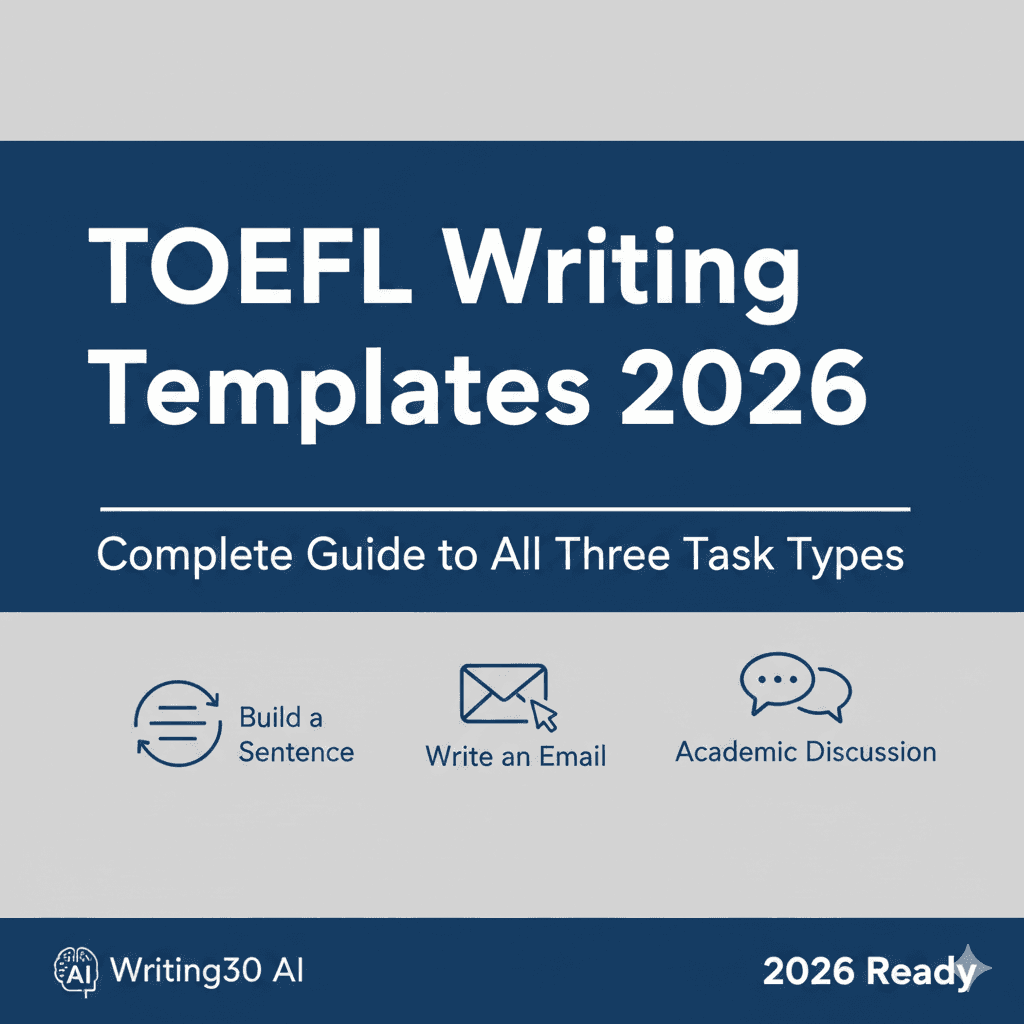
The TOEFL Writing section that took effect on January 21, 2026 is short: three tasks in about 23 minutes of writing time. That changes what time management means. You are no longer budgeting a 30-minute essay — you are pacing three sprints with different rhythms. (If you learned the old Integrated/Independent essay timings from older guides, retire them; that format no longer exists.)
The 2026 section at a glance
- Build a Sentence (~6 minutes): several items; arrange 6-12 given words into a correct sentence each time.
- Write an Email (~7 minutes): one email covering three given points; practice target 80-120 words.
- Academic Discussion (~10 minutes): one response to a professor and two peers — at least 100 words (target 100-150).
Each task punishes a different pacing mistake: rushing Build a Sentence causes careless word-order slips, slow starts kill the email, and overlong planning eats the discussion response.
Try it — write one response and have it scored
A real prompt from the question bank, scored by the same automated rater a signed-in learner gets. No account, no card, no email.
Discussion Topic
Social Media and Privacy
This refers to the balance between sharing personal information on social media platforms and the expectation or right to control who accesses that information. With the increasing use of platforms like Facebook, Instagram, and TikTok, individuals often share details about their lives, but concerns about data breaches, targeted advertising, and the misuse of personal data are also growing.
Professor's Question
Given the widespread use of social media, do you think individuals should be more concerned about their privacy online, or is the benefit of connection and sharing worth the potential risks? Explain your reasoning.
No account, no card, no email. One scored response per day. Scores are produced by an automated rater against the ETS rubric and are Reach120 estimates, not official ETS scores.
Minute-by-minute pacing per task
Build a Sentence: ~45 seconds per item
- 10 seconds: read the context sentence and question; find the subject and main verb tiles.
- 25 seconds: build noun chunks (article + noun), place adverbs, assemble the sentence.
- 10 seconds: read it back silently — if you stumble, re-check word order before moving on.
Write an Email: 1 + 5 + 1
- 1 minute: mark the three required points; decide the register from the recipient.
- 5 minutes: draft — greeting, one purpose sentence, one sentence per point, closing.
- 1 minute: check your length against the 80-120 word practice target and that every point got a full sentence.
Academic Discussion: 2 + 6.5 + 1.5
- 2 minutes: read the professor and both peers; write a five-word position and the one point neither peer made.
- 6.5 minutes: draft — position, engage one peer by name, develop your distinct point with an example, one closing line.
- 1.5 minutes: tighten toward your 100-150 word target and fix the grammar you know you repeat.
Practice under timed conditions
Simulate the full ~23-minute section once or twice a week: a Build a Sentence set, one email, one discussion post, back to back. The free printable Build a Sentence, Write an Email, and Academic Discussion task packs give you numbered exercises with the right time limits printed on them.
- Analyze your pacing: note where the timer caught you — planning, drafting, or reviewing — and adjust the split, not your writing speed.
- Get feedback on the result: self-review with the pack checklists, ask a teacher, or use scored practice (on Reach120 that is a paid subscription — the sample report shows what it returns).
Staying calm and focused
- One breath per task switch: the section moves fast; a deliberate breath between tasks resets your pace better than rushing into the next prompt.
- Trust the drill: if you practiced the 1+5+1 email rhythm ten times, follow it on test day even when the scenario looks unusual.
- Do not chase perfection on one item: a stuck Build a Sentence item costs you two others. Make your best arrangement and move.
Conclusion
Time management for the 2026 TOEFL Writing section means three rehearsed rhythms, not one essay budget: 45 seconds per sentence item, 1+5+1 for the email, 2+6.5+1.5 for the discussion. Drill each rhythm separately with the free task packs, then combine them in full timed sections until the pacing is automatic. For examples of what strong timed responses look like, browse the free scored samples.
TOEFL 2026 Writing
Practice all three 2026 writing tasks
Build a Sentence, Write an Email and Academic Discussion — timed practice scored on the 0–5 rubric with the specific fixes for your response. Build a Sentence is free and unlimited; every account also gets 3 AI-scored writing responses to start, then one more each day, up to 10 in total across Write an Email and Academic Discussion.
See writing practice