Writing Strategies
Note-Taking for TOEFL Integrated Writing (Retired Task) — Historical Guide
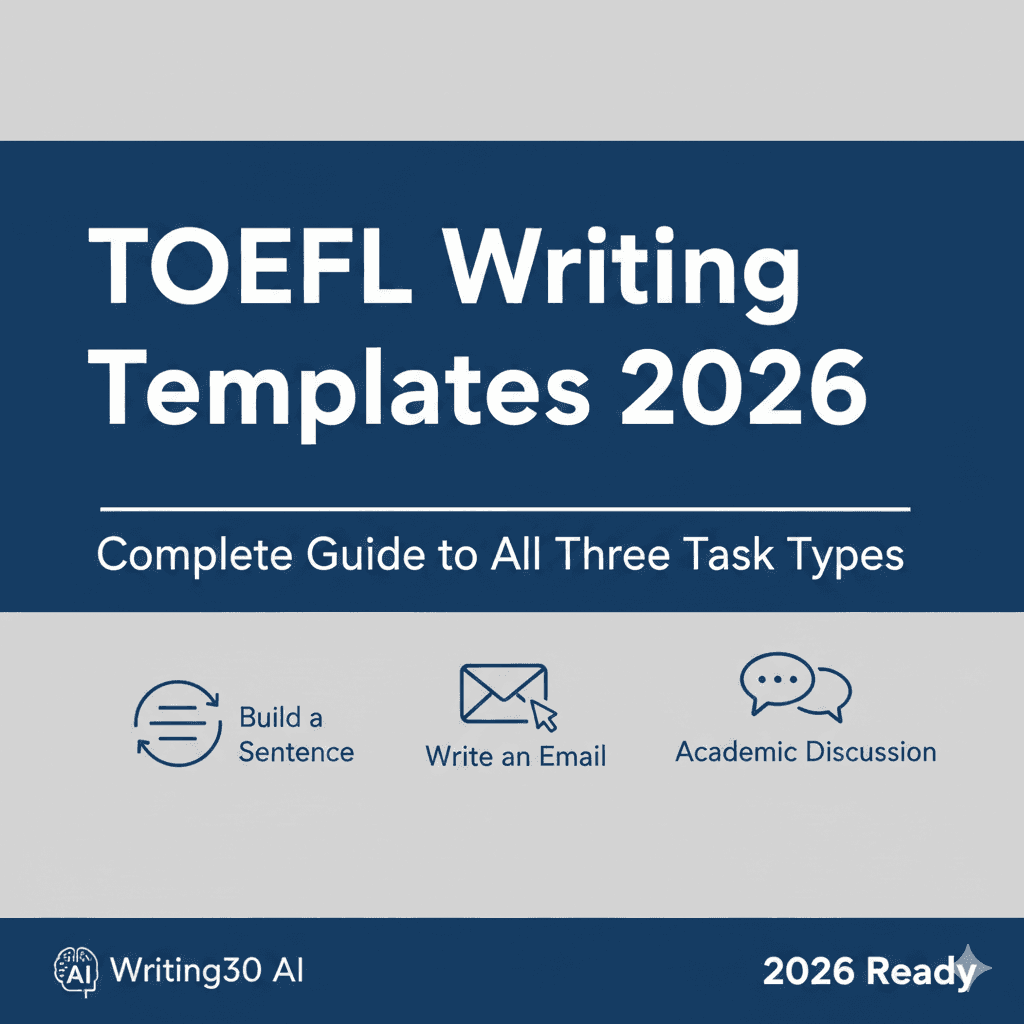
Format notice (updated July 2026): the Integrated Writing task described below was retired from the TOEFL on January 21, 2026. Nothing on this page prepares you for the current Writing section, which has three different tasks — Build a Sentence, Write an Email, and Academic Discussion. For current preparation, use the 2026 writing tasks guide and the free resource library. This page is preserved as a historical reference for teachers, researchers, and anyone comparing old prep material against the accuracy audit checklist.
This article originally taught note-taking for the Integrated Writing task. It has been rewritten as a historical record: what the task was, how note-taking worked for it, and which parts of the skill still transfer to today's test — without pretending any of it is current writing-section prep.
What the Integrated Writing task was
From 2005 until January 2026, TOEFL Writing opened with Integrated Writing: test-takers read a short academic passage (about 3 minutes), listened to a lecture on the same topic, and then had 20 minutes to summarize how the lecture supported or challenged the reading. Responses were evaluated on how accurately and coherently they synthesized the two sources. Because the lecture played only once, note-taking was the core skill — writers who missed a lecture point could not recover it.
Try it — write one response and have it scored
A real prompt from the question bank, scored by the same automated rater a signed-in learner gets. No account, no card, no email.
Discussion Topic
Voting Age
Some countries are debating whether younger citizens should have voting rights, arguing they are affected by political decisions and should have a voice.
Professor's Question
Should the voting age be lowered to 16 in national elections? Defend your position.
No account, no card, no email. One scored response per day. Scores are produced by an automated rater against the ETS rubric and are Reach120 estimates, not official ETS scores.
How note-taking worked for it
Three techniques dominated prep courses of that era, and they worked:
1. Shorthand for the reading's three points
Readings almost always made three main points. Test-takers jotted them as compressed fragments — for a climate passage: 1. rising temps · 2. melting glaciers · 3. ocean acidification — leaving room next to each for what the lecture would say about it.
2. Split-page layout
Reading notes went on the left half of the page, lecture notes on the right, aligned point by point. One glance showed whether the lecturer supported or contradicted each reading point, which was exactly the structure the response needed.
3. Relationship signals over content
Strong note-takers listened for pivots — "in contrast," "however," "this overlooks" — and recorded the relationship("contradicts: human activity vs. natural cycles") rather than transcribing sentences. The scoring rubric of that era rewarded capturing how the sources disagreed, not how much of the lecture you could reproduce.
Which of these skills still transfer
- Listening note-taking transfers directly — the current TOEFL Listening section still plays audio once. See the Listening note-taking guide for the current section's templates.
- Relationship mapping survives in a different form: the current Academic Discussion task rewards responding to peer posts — agreeing, disagreeing, extending — which is the same skill of tracking who claims what. The Academic Discussion task pack drills it on the current format.
- Compression under time pressure is now spent differently: the current writing tasks are short (practice targets sit at 80-120 and 100-150 words), so planning happens in one or two scratch lines, not a split page.
What to study instead for the current test
If you arrived here preparing for a TOEFL date after January 21, 2026, spend your time on the three current tasks: the Build a Sentence, Write an Email, and Academic Discussion packs are free and printable, and the pacing guide covers the current ~23-minute section rhythm. Historical material like this page is for context, not practice.
TOEFL 2026 Writing
Practice all three 2026 writing tasks
Build a Sentence, Write an Email and Academic Discussion — timed practice scored on the 0–5 rubric with the specific fixes for your response. Build a Sentence is free and unlimited; every account also gets 3 AI-scored writing responses to start, then one more each day, up to 10 in total across Write an Email and Academic Discussion.
See writing practice